Opening Hours: Mon- Sat 9:30 Am- 6:30 PM (Sunday-Specialty Clinics)
Eye Care Services
Comprehensive eye care including therapy, myopia control, and rehabilitation.
Amblyopia (Lazy Eye)
Therapies and effective exercises to strengthen weak eyes and improve vision clarity.
Strabismus (Squint or Crossed Eye)
Advanced treatments to align the eyes and restore normal binocular vision.
Comprehensive Eye Checkup
Complete vision screening to detect any eye problems early and keep your eyes healthy.
Dyslexia Vision Therapy
Specialized care to improve reading and learning difficulties caused by visual processing issues.


Cortical Visual Impairment (CVI)
Advanced care to manage and correct double vision for clear sight.
Diplopia (Double Vision)
Convergence Insufficiency
Vision Therapy for ADHD / ADD
Supportive therapies for vision loss caused by brain-related conditions.
Effective exercises and treatments to improve near vision and reading comfort.
Eye exercises designed to improve focus, attention, and visual skills.


Myopia Control Clinic
Treatments to slow down the progression of nearsightedness in children and adults.
Nystagmus Treatment
Low Vision Rehabilitation
Optometric Syntonics Phototherapy
Vision therapy programs for patients recovering from brain injuries.
Light therapy to improve vision, eye coordination, and focus.
Specialized care for uncontrolled eye movements to improve stability and clarity.
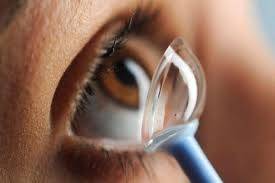
Contact Lenses – Scleral, Rose K, Ortho-K
Vision therapy programs for patients recovering from brain injuries.
Neuro Rehabilitation for Traumatic Brain Injury
Remote Vision Therapy
Opticals
Online vision therapy sessions for convenient treatment at home.
Customized lenses for comfort, clear vision, and special eye conditions.
Wide range of quality frames, lenses, and eyewear accessories for every style.
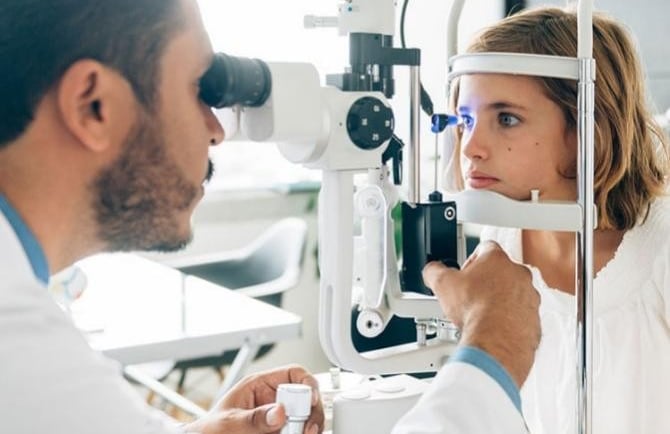
Comprehensive Eye Checkup
A comprehensive eye exam is a thorough checkup by an eye care specialist that assesses your vision and overall eye health, going beyond a simple vision test. It involves various noninvasive tests to check visual acuity, eye movement, eye pressure, and the internal structures of the eye, including the retina. Regular exams are crucial to detect early signs of eye diseases like glaucoma or macular degeneration and to identify systemic health conditions such as diabetes or hypertension, which can be signalled by changes in the eyes.
Our complete eye examination goes beyond just checking your glasses prescription. During your visit, we assess:
Vision Assessment (Visual Acuity): Measuring how clearly you see at different distances.
Refraction Test: To determine the most accurate glasses or contact lens prescription.
Eye Muscle & Movement Evaluation: Ensuring both eyes work together comfortably.
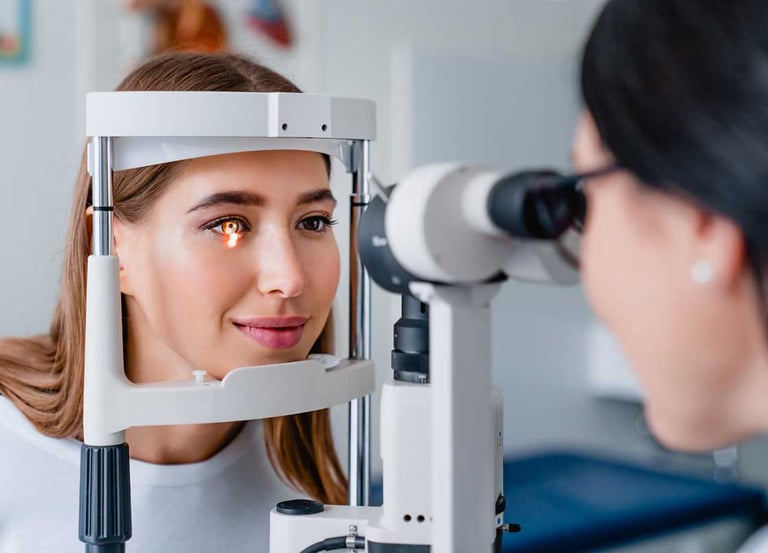
Slit Lamp Examination: A detailed check of the front part of your eyes (cornea, lens, conjunctiva).
Intraocular Pressure Test: Screening for glaucoma.
Retinal Examination: A thorough look at the back of your eye (optic nerve, macula, retina, and blood vessels).
Overall Eye Health Review: Detecting early signs of conditions like cataract, glaucoma, and retinal diseases.
A comprehensive eye checkup helps protect not just your vision, but also your overall health—since many systemic conditions (like diabetes or hypertension) can show signs in the eyes.


Myopia Control Clinic
At our Myopia Control Clinic, we are dedicated to protecting your child’s vision and slowing the progression of nearsightedness. With the rise in screen time and reduced outdoor activities, myopia is becoming more common at younger ages, making early intervention more important than ever.
We offer evidence-based treatments tailored to each child’s needs, focusing not just on improving eyesight today, but also on safeguarding long-term eye health. Our goal is to reduce the risks of future eye diseases linked to high myopia and ensure clear, comfortable vision for years to come.
Key Highlights:
Specialized care for children and teenagers with progressing myopia
Customized treatment options including:
Myopia-control spectacle lenses
Contact lens therapies (e.g., ortho-k, soft multifocal lenses)
Low-dose atropine treatment
Regular monitoring to track vision changes and treatment effectiveness
Guidance on lifestyle habits to help protect young eyes
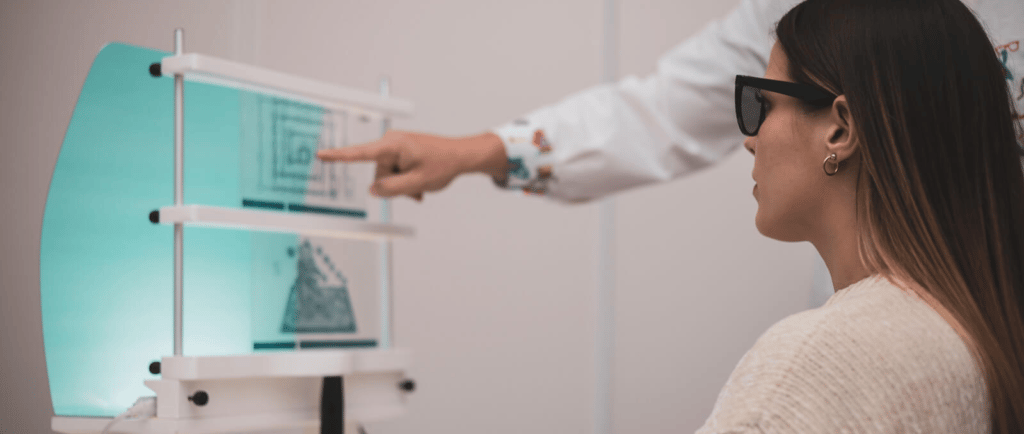
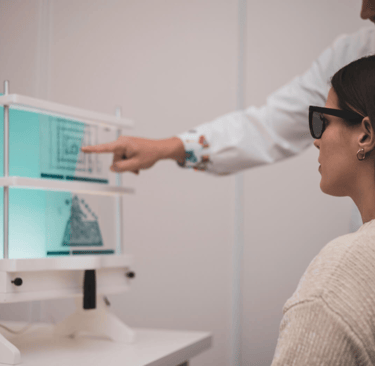
Vision Therapy
Vision therapy is a personalized, optometrist-supervised program of visual exercises and specialized equipment, such as lenses and computer software, designed to improve eye coordination, eye-hand coordination, and visual processing skills. It's used to treat functional vision problems like amblyopia (lazy eye), strabismus (crossed eyes), double vision, eye teaming issues, and difficulties with focusing, depth perception, and concentration. The goal is to enhance the effectiveness of the visual system and improve the brain's ability to interpret visual information, leading to clearer, more comfortable, and more efficient vision.
Conditions Treated with Vision Therapy
Amblyopia (Lazy Eye): A common condition, especially in children, where one eye doesn't develop proper vision.
Strabismus (Crossed Eyes): A condition where the eyes are misaligned.
Convergence Insufficiency: Difficulty with the eyes' ability to turn inward to focus on a near object.
Eye Fatigue and Discomfort: Reducing discomfort or strain from visual tasks like reading or computer work.
Tracking Problems: Difficulty following a moving object or line of text.
Who Can Benefit
Vision therapy is beneficial for both children and adults who experience symptoms like frequent headaches, eye strain, difficulty with reading or concentration, poor depth perception, or poor visual performance.
Low Vision
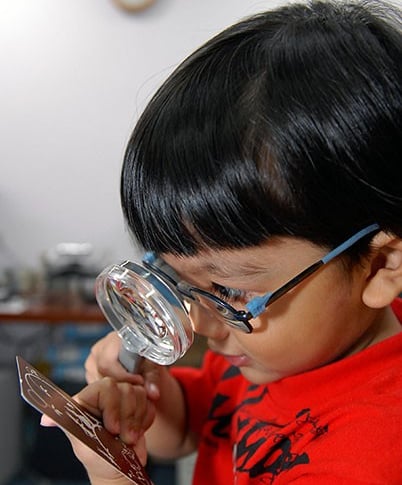
Low vision is a permanent loss of vision that cannot be improved with eyeglasses, contact lenses, medicine, or surgery. It makes everyday tasks more challenging. It can be shocking and depressing to learn you have low vision, but there are things you can do to cope with it.
What causes low vision?
Low vision is a consequence of certain eye diseases, such as:
Glaucoma
Age-related macular degeneration
Diabetic retinopathy
Retinitis pigmentosa
Eye cancer
Albinism
Low vision can also result from some eye injuries and brain injuries.
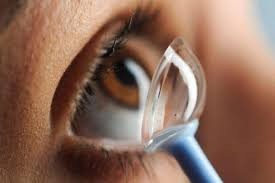
Contact Lenses
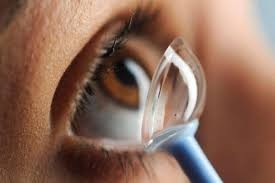
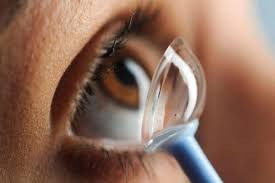
Contact lens options appear to be limitless. While soft contact lenses are the most popular among patients and eye care professionals, numerous other contact lens options can provide comfortable, clear vision.
Rigid gas permeable lenses, as well as newer scleral or hybrid lenses, are commonly used to provide visual correction for those who struggle with soft contact lenses.
Specialty contact lenses can help with everything from improving symptoms of Dry Eye Disease to providing clear vision to people with a higher degree of astigmatism. They’re designed for patients with corneal conditions or other eye issues for which conventional contacts are ineffective.
Which Specialty Contact Lens Will Work for You?
The only way to truly know if RGP, soft, or hybrid contact lenses are right for you is to have a thorough contact lens exam and fitting at Specialty Eye. Book an appointment with us, our team will work closely with you to determine your concerns and how contact lenses can best meet your needs.
Neuro- Optometric Rehabilitation
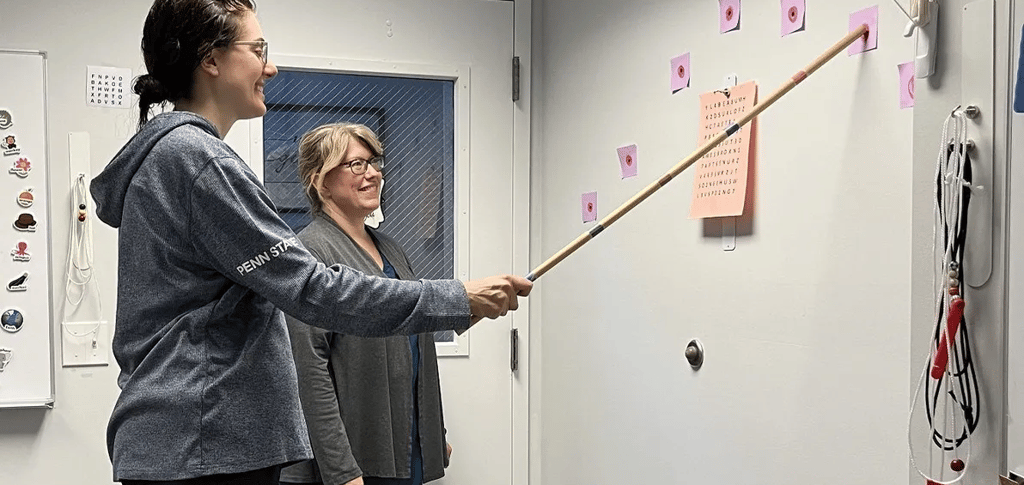
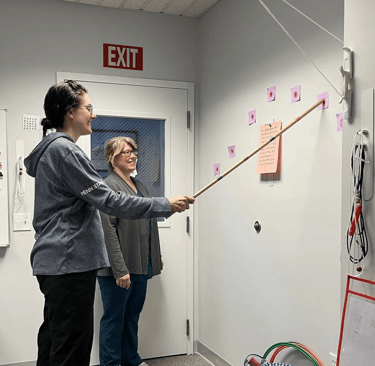
Neuro-optometric rehabilitation is an individualized treatment regimen for patients with visual deficits as a direct result of physical disabilities, traumatic brain injuries, and other neurological insults. Neuro-optometric therapy is a process for the rehabilitation of visual / perceptual / motor disorders. It includes, but is not limited to, acquired strabismus, diplopia, binocular dysfunction, convergence and/or accommodation paresis/paralysis, oculomotor dysfunction, visual-spatial dysfunction, visual perceptual and cognitive deficits, and traumatic visual acuity loss.
Patients of all ages who have experienced neurological insults require neuro-optometric rehabilitation. Visual problems caused by traumatic brain injury, cerebrovascular accident, cerebral palsy, multiple sclerosis, etc., may interfere with performance causing the person to be identified as learning disabled or as having attention deficit disorder. These visual dysfunctions can manifest themselves as psychological sequelae such as anxiety and panic disorders as well as spatial dysfunctions affecting balance and posture.
A neuro-optometric rehabilitation treatment plan improves specific acquired vision dysfunction determined by standardized diagnostic criteria. Treatment regimens encompass medically necessary non-compensatory lenses and prisms with and without occlusion and other appropriate medical rehabilitation strategies.
Vision Nest – Your Home for Eye Care
Our mission is to enhance visual health through evidence-based optometry practices, patient education, and modern technology.
REACH OUT TO US AT
Jyoti.gangta01@gmail.com
First Floor, LC House‑2, near Shimla Public School, Khalini, Shimla, H.P.
+91- 9501979083, +91-8544735921
© 2025. All rights reserved.
Designed and Maintained by The Digital Catalog